Skip hire options near Olympia London Earls Court
Posted on 30/06/2026

Skip hire options near Olympia London Earls Court: a practical local guide
If you are clearing a flat, tackling a renovation, or just trying to get on top of an intimidating pile of waste, the choice of skip hire options near Olympia London Earls Court can save you time, hassle, and a fair bit of stress. The tricky part is not finding a skip. It is finding the right one for your street, your timeline, and the type of waste you actually have. Near Olympia and Earls Court, that matters more than people think, because access can be tight, roads can be busy, and some projects need a cleaner, faster alternative to a traditional skip.
This guide breaks it all down in plain English. You will see how skip hire works, when it makes sense, when it doesn't, what to check before booking, and which practical alternatives may be better for certain jobs. We will also look at local considerations around Olympia London, Earls Court properties, and the reality of working in a built-up part of West London. Let's face it, waste removal sounds boring until you are staring at plasterboard, old furniture, or renovation debris in a hallway that suddenly feels one metre wide.
Why skip hire options near Olympia London Earls Court matters
Olympia sits at the edge of one of London's busier, more mixed-use districts. Earls Court has mansion blocks, period conversions, mews homes, basement works, commercial spaces, and the kind of "quick clear-up" jobs that are rarely quick at all. In that setting, the wrong waste solution can create avoidable problems: blocked access, complaints from neighbours, poor timing around loading restrictions, or a skip that is simply too large for the available space.
That is why comparing skip hire options near Olympia London Earls Court properly is worth the effort. A skip can be ideal for predictable, bulky, ongoing waste. But in a dense London location, the decision is often shaped by practical details: where the skip will sit, whether a permit might be needed, how long it will stay, and whether you are dealing with mixed junk, construction rubble, garden waste, or a house clearance.
There is also the simple issue of workflow. If you are in the middle of a move or renovation, every extra trip to a tip-like drop-off point costs time. If your project is in Earls Court or close to Olympia, that lost time tends to pile up fast. A good waste plan keeps the job moving and keeps the site tidier, which sounds minor until you are stepping around bags of old tiles for three days straight.
For people comparing skip hire with other options, it may help to also look at broader services such as the full waste and clearance service overview or more specific help like rubbish collection in Earls Court. In many cases, the best answer is not "skip or nothing"; it is the method that matches the access and the waste mix.
How skip hire options near Olympia London Earls Court works
In simple terms, skip hire means a container is delivered to your property or site, filled over an agreed period, and collected once you are done. That much is straightforward. The real decision is in the details.
First, you choose the skip size. Small skips suit lighter clear-outs or bathroom rip-outs. Medium skips are often used for household refurbishments. Larger skips suit heavier or ongoing projects, though they are not always suitable for narrow roads or limited frontage. Near Olympia and Earls Court, size and placement matter because not every property has generous kerb space. Sometimes the best option is a smaller skip, and sometimes a different waste method is more sensible altogether.
Second, you check access. Can a lorry reach the property easily? Is there space for delivery without blocking a full road? Do neighbours need to be considered? If the skip needs to go on a public highway, a permit may be required. That process is normal in London, but it should be planned, not assumed. A rushed booking can turn into a delay very quickly. Nobody enjoys discovering the skip cannot be placed where they expected. Not at all.
Third, you think about the waste type. General mixed waste, inert waste such as rubble, garden waste, furniture, and builder's debris all behave differently. Some materials are heavier than they look. Others, like plasterboard, can have separate handling expectations. A decent provider will ask what you are loading so you get the right container and avoid surprise surcharges later.
Finally, you fill the skip safely. Keep waste level with the top edge, do not overload it, and avoid prohibited items. That is not just a rules thing; it is a transport and safety issue. Overfilled skips are awkward to collect and can create a headache for everyone involved.
Key benefits and practical advantages
The main appeal of skip hire is convenience, but that word sells it short. Done well, it creates a cleaner and more controlled project from start to finish.
- Time savings: waste goes straight into one container instead of being moved repeatedly.
- Better site organisation: a tidy work area makes renovation, clearance, or landscaping easier to manage.
- Suitable for bulky waste: broken furniture, packaging, rubble, and mixed debris are easier to handle in a skip than in small bins.
- Useful for staged projects: if the job lasts several days, a skip gives you a central place to load waste as it appears.
- Good for heavy loads: builder's waste can be awkward in bags, especially when it gets wet or dusty.
In Earls Court, there is also a subtle quality-of-life benefit. Less waste stacked in a hallway or on a pavement means fewer awkward conversations with neighbours and less chance of making the property feel like a building site. That matters if you are living in the property while the work is happening. Truth be told, comfort and coordination are half the battle.
If your project involves demolition, strip-out work, or a room-by-room refurbishment, it can be smart to compare skip hire with more targeted services such as builders' waste clearance in Earls Court or waste removal in Earls Court. For some jobs, the flexibility of a collection service can be more cost-effective than hiring a container for several days.
Who this is for and when it makes sense
Skip hire is not just for large contractors. In and around Olympia London and Earls Court, it can suit a wide range of people and projects.
- Homeowners renovating a flat or house: good for bathrooms, kitchens, flooring, and light structural work.
- Landlords between tenancies: useful when a property needs a fast reset after a tenant move-out.
- People clearing out clutter: ideal if you have accumulated furniture, boxes, broken items, and mixed household waste.
- Office managers: works well for office moves, storage clearance, and furniture replacement projects.
- Gardeners and property maintainers: especially if you are dealing with branches, soil, turf, and old outdoor materials.
It makes sense when waste is predictable, bulky, and spread across several days. It may be less suitable if you have only a small amount of mixed rubbish, very limited access, or a one-off load that can be removed in a single visit. In those cases, a collection-based service can be simpler. If you are weighing up different disposal routes, the topic is closely connected to rubbish clearance in Earls Court and even junk removal in Earls Court, both of which can be more agile than a skip when space is tight.
One useful rule of thumb: if you will be generating waste steadily over a few days, a skip often earns its keep. If you need the mess gone today, or almost today, direct collection may be the calmer choice. Simple, really, though not always obvious in the middle of a stressful clear-out.
Step-by-step guidance
If you want the process to run smoothly, treat it as a planning exercise rather than a last-minute booking. Here is a sensible way to do it.
- List the waste you have. Separate heavy materials, furniture, green waste, and general rubbish. A rough list is enough.
- Estimate the volume. Think in terms of how many rooms, bags, or bulky items you are dealing with rather than trying to guess a perfect cubic yardage figure.
- Check access. Measure the space outside the property, look for tight corners, and think about delivery time. Early morning can be quieter, but only if that suits the road.
- Confirm whether a permit might be needed. If the skip sits on public land, ask about the process before you book.
- Choose a method. Decide between skip hire, man-and-van style collection, or a more specialised clearance service.
- Book with clarity. Give accurate details about the waste, access, and timing. Good information prevents awkward surprises later.
- Load it properly. Put heavy items in first, break down anything bulky where possible, and keep the load level.
- Arrange collection promptly. Do not leave the container in place longer than necessary, especially in a busy area near Olympia.
A small but important detail: if you are doing refurbishment work, try to fill the skip in a logical sequence. Put the heaviest rubble in first, then lighter mixed waste on top. That sounds obvious, but you would be surprised how often people throw everything in randomly and end up wasting space. Happens all the time.
Expert tips for better results
Here is where experience really helps. The best skip hire outcomes are usually the ones planned with a bit of local common sense.
- Choose the smallest skip that genuinely fits the job. Bigger is not always better, especially on a narrow Earls Court street.
- Ask about mixed waste rules early. Some materials can change the handling or disposal requirements.
- Use the skip as part of the work plan. Keep it near the main source of waste so people are not carrying debris through the property.
- Protect surfaces. If the skip is being loaded from a front path or driveway, use boards or mats where appropriate to reduce marking.
- Book around your neighbours. In dense residential blocks, a considerate delivery slot can prevent friction before it starts.
- Sort as you go. Even if you are using a mixed skip, grouping waste types on site makes the load easier to manage.
It is also wise to think about your wider disposal plan. For example, if your project is mostly furniture and household clutter, a dedicated furniture disposal service may be more suitable than hiring a skip for several days. Likewise, a loft clear-out or garage clear-out can often be handled in one clean visit, which is oddly satisfying once it is done.
And a small human tip: if you are clearing a property in winter, get the waste outside as early as practical. Wet cardboard, damp plaster dust, and muddy bags all become more annoying by the hour. London weather does not need much encouragement.

Common mistakes to avoid
Most skip-hire problems are avoidable. The same few mistakes show up again and again.
- Guessing the size too loosely. A skip that is too small can force a second booking, which is irritating and often more expensive.
- Ignoring access limits. A container may be available, but that does not mean it can be dropped where you imagined.
- Mixing prohibited items into general waste. Some items need special handling, so always ask before loading them in.
- Overfilling above the rim. Collection can be refused or delayed if the load is unsafe.
- Booking too late in a project. Once rubbish starts building up, the site gets harder to work in.
- Not planning around permit timing. If a permit is needed, leaving that until the day before is not ideal. Not by a long shot.
Another common issue is using skip hire for waste that would be better handled by a clearance team. If you have multiple bulky items, awkward access, or a lot of sorting to do, it may be more practical to use house clearance in Earls Court or office clearance in Earls Court instead. Those services remove the labour burden as well as the waste itself.
Tools, resources and recommendations
You do not need a complicated toolkit to make a waste project run well. You just need a few sensible basics and the right service match.
- Measuring tape: useful for checking frontage, gate widths, and path access.
- Heavy-duty gloves: especially if you are moving broken furniture, timber, or sharp rubble.
- Protective dust sheets or boards: handy when waste has to cross a clean hallway or shared entrance.
- Marker pens and labels: helpful if you are separating reusable items from rubbish.
- Basic room-by-room checklist: keeps the clear-out focused and prevents rework.
As for service recommendations, the main thing is to match the disposal method to the job. For garden-heavy waste, a specific garden waste removal service in Earls Court may be cleaner than a general skip. For attic clutter, loft clearance in Earls Court can save a lot of lifting. For a cluttered garage, garage clearance is often the calmer option.
Small note, but a good one: if you are comparing services, look beyond price alone. Timing, access support, and how much labour you have to do yourself often matter just as much as the number on the quote.
Law, compliance and best practice
Waste disposal in the UK is not something to be casual about. The exact requirements depend on the waste type and location, but the general principle is straightforward: waste should be handled safely, transported properly, and disposed of through appropriate channels. In built-up parts of London, that becomes even more important because of access, neighbours, and public space use.
If a skip sits on the highway, a permit may be required. If a project produces materials that are classed differently from general household waste, those materials may need separate treatment. And if you are hiring a provider, it is sensible to confirm that they operate with appropriate insurance and a safe working approach. That is why pages such as insurance and safety information and recycling and sustainability guidance are worth reading before you book.
Best practice is not complicated:
- describe your waste honestly
- keep items out of the skip if they should not be there
- check access and placement before delivery
- avoid blocking pavements, drives, or entrances
- use a provider that can explain the process clearly
If you are not sure whether skip hire is the right route, ask for a quote and compare it with collection-based disposal. That is usually the easiest way to make a calm decision instead of guessing under pressure.
Options, methods and comparison table
Here is a practical comparison of the most common waste removal methods near Olympia London Earls Court.
| Option | Best for | Strengths | Watch-outs |
|---|---|---|---|
| Skip hire | Ongoing renovations, bulky waste, staged clear-outs | Convenient, handles large volumes, good for mixed projects | Needs space, may need a permit, not ideal for tiny jobs |
| Man-and-van collection | One-off clearances, awkward access, quick removal | Fast, flexible, less site space required | Less useful if waste is spread over several days |
| Specialist clearance service | Houses, offices, lofts, garages, furniture-heavy jobs | Hands-on help, less lifting for you, tidy finish | May be more tailored than some people expect, so be clear about the scope |
| Targeted waste removal | Garden waste, junk, furniture, builders' debris | Good for specific waste streams and focused jobs | Not always the best fit for mixed, evolving projects |
For many Earls Court jobs, the decision is less about which method is "best" in theory and more about which one makes the site workable. A builder may love a skip. A resident clearing a basement flat with no front space may not. Different jobs, different answers. Very normal.
Case study or real-world example
Consider a typical Earls Court scenario: a couple is renovating a two-bedroom flat near Olympia before moving in. They have old kitchen units, broken flooring, plaster offcuts, packaging, and a few bulky furniture items from the previous owners. Their first instinct is to book the biggest skip they can find, because, well, bigger seems safer.
But after checking the entrance, the shared access, and the street layout, they realise a large skip would be awkward and potentially disruptive. The better plan is a smaller skip for the renovation debris, paired with a separate clearance for the bulky furniture. That keeps the site manageable, avoids clogging the front of the building, and means the flat is not half full of rubbish for days on end.
That is the part people often miss. The smartest waste plan is not always the most obvious one. In a compact London setting, the combination of services can work better than a single oversized solution.
If the project also involves a deeper property refresh, they might pair the waste plan with broader local information, such as advice for buying homes in Earls Court or the Earls Court property investment guide. Not because those articles are about waste, obviously, but because property decisions and renovation decisions often travel together.
Practical checklist
Use this before you book.
- Have I listed the main waste types?
- Do I know roughly how much waste there is?
- Is there enough space for delivery and collection?
- Could a permit be needed if the skip is off-property?
- Would a collection service be easier than a skip?
- Have I separated hazardous or restricted items?
- Do I understand the likely timescale?
- Will I be loading waste gradually or all at once?
- Have I checked safety, insurance, and payment information?
- Is there a clearer clearance option for furniture, lofts, or garages?
If most of your answers point toward access issues or small-scale waste, skip hire may not be the best fit. If the waste volume is steady and the site has room, it probably is. That simple distinction saves a lot of grief.
Conclusion
The best skip hire options near Olympia London Earls Court are the ones that fit your access, your waste type, and your project pace. In a busy part of West London, that usually means thinking a little harder before you book and not assuming the largest skip is automatically the most practical one.
For some jobs, a skip is exactly the right answer. For others, rubbish collection, junk removal, or a more specialised clearance service will be faster, tidier, and easier to live with. The main thing is to choose based on the real conditions on the ground, not the idea of the job in your head. That is where the savings, and the sanity, usually are.
If you are comparing services, check the practical details, look at the waste type, and think about the space around the property. A bit of planning now can make the whole project feel much lighter later. And honestly, once the waste is gone and the floor is clear, the place feels different straight away. Better. Calmer.
Get a free quote today and see how much you can save.
When you are ready to move forward, take the next step with confidence and choose the option that makes the rest of the job feel easier, not harder.



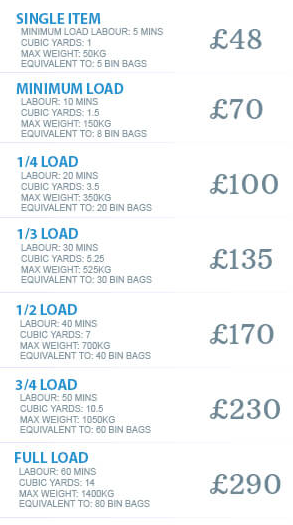
 Tipper Van - Rubbish Removal and Waste Disposal Prices in Earls Court, SW5
 Luton Van - Rubbish Removal and Waste Disposal Prices in